Why healthcare advertising needs a higher evidence standard
A clinic, hospital or health service is not selling an ordinary impulse purchase. The audience may be worried, the information can affect a care decision and an exaggerated claim can cause real harm.
That changes the advertising brief. The campaign should create an informed next step without promising a diagnosis, cure or outcome that the evidence cannot support.
Strategy 1: education before promotion
Useful healthcare creative answers a real patient question in plain language. It can explain when to seek professional advice, what a consultation involves or how to prepare for an appointment.
The content should identify the qualified professional responsible for the information and avoid turning general education into individual medical advice.
Useful campaign measures include:
- Video completion or article engagement for the educational message
- Valid enquiries rather than raw form submissions alone
- Appointment booking and attendance rates
- Questions or misunderstandings revealed during follow-up
Strategy 2: use proof only with explicit consent
Patient stories can help people understand an experience, but consent, privacy and accuracy come first. A testimonial should never imply that everyone will receive the same result.
Before publishing a patient story, the healthcare provider should confirm that it has permission for the exact channel, duration and information being used. Sensitive health details should not be added merely to make an ad more persuasive.
When consent or substantiation is uncertain, use clinician-led education, facility information or anonymised process explanations instead.
Strategy 3: retarget with useful context
Retargeting should answer the next question, not repeatedly pressure a person who viewed sensitive health content. Depending on the service and platform rules, a safer sequence may explain:
- Who provides the consultation
- Where the facility is located
- What to bring to an appointment
- How pricing or insurance questions are handled
- How to contact the provider directly
The account owner should review current Meta advertising rules and obtain appropriate clinical, privacy and legal review before launching a healthcare campaign.
The evidence boundary on this historical note
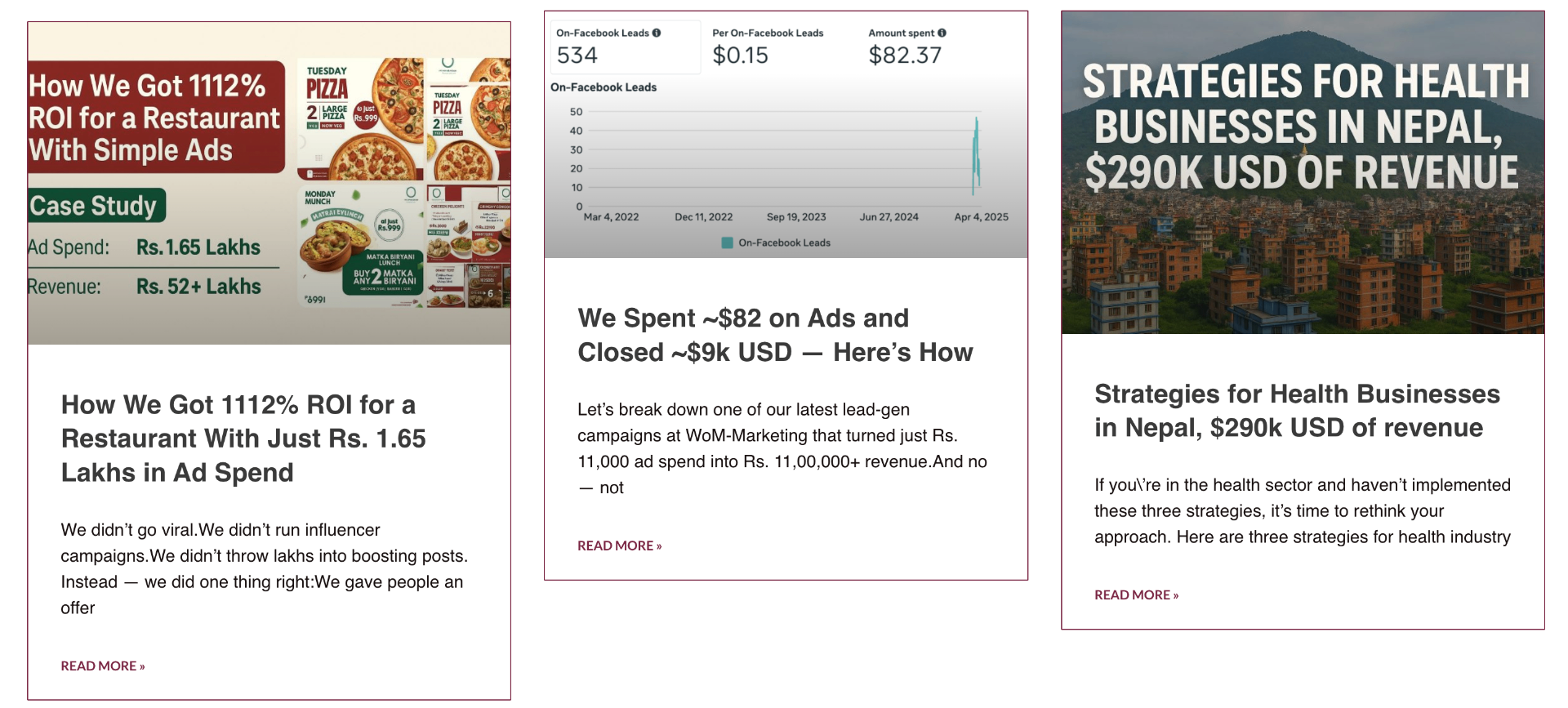
An older version of this page repeated a $290,000 revenue and 2,400% ROI claim from a campaign graphic. The available image does not show the source records, attribution method, margin or reconciliation needed to verify those figures, so this version does not present them as proven results.
That does not make the operating lessons useless. It means the lesson should stand on a transparent method rather than an unsupported headline number.
A measurement model for a Nepal healthcare team
The practical conclusion
The strongest healthcare campaign is not the loudest one. It gives people accurate context, protects consent, routes enquiries responsibly and helps the provider learn where communication is failing.
See the wider Meta Ads consulting method for Nepal businesses or share the campaign context before deciding what to test.